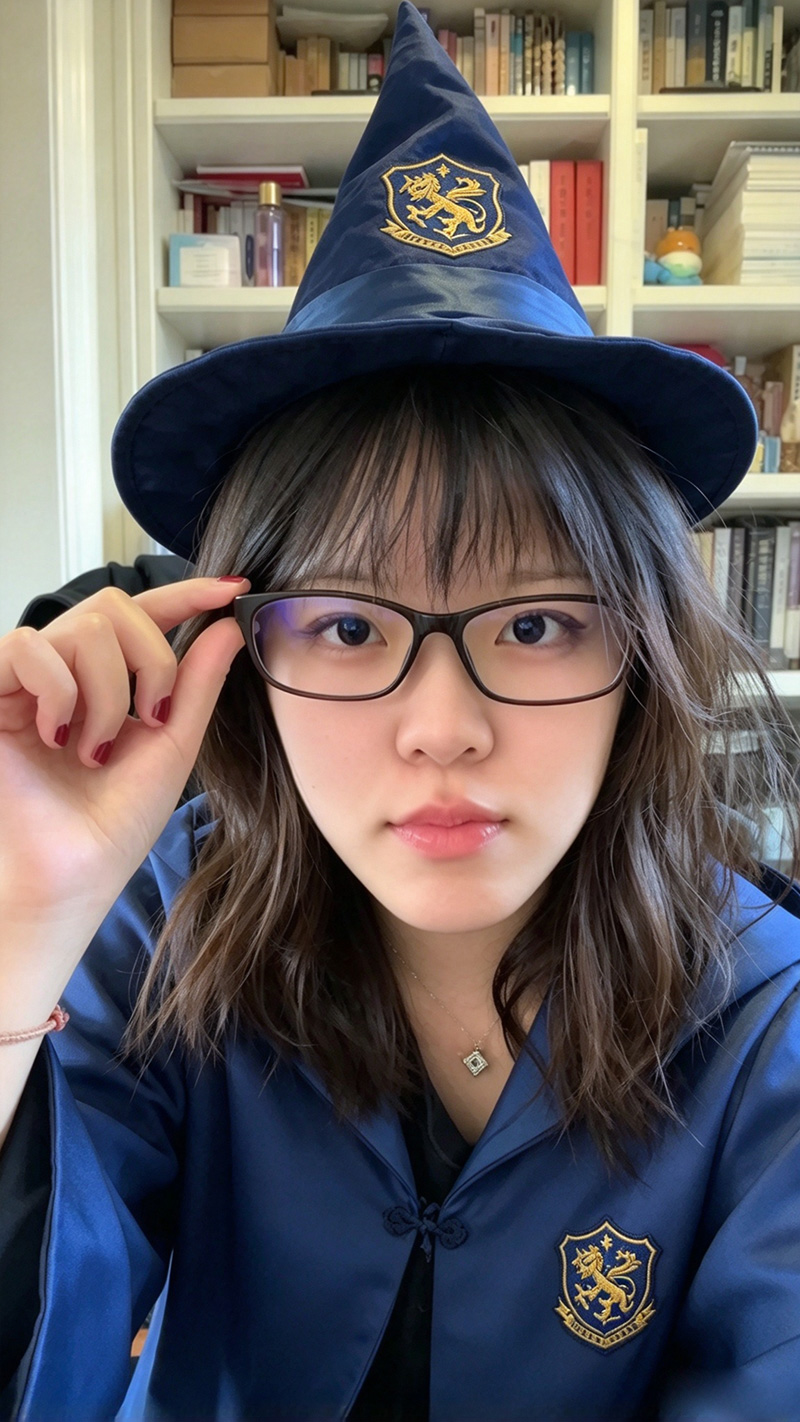
I have filled ten notebooks with stories since elementary school. I am psychology enthusiast who once became obsessed with Jungian archetypes, MBTI, and typing everyone around me. Again, this is me, a curious person who likes meeting people from different worlds and asking them about the stories behind their labels.
And yes, nice to meet U.
He Could Have Gone to University. Instead, He Entered Shanghai's Nightlife Industry.
What happens when someone chooses the nightlife industry instead of university?
In this interview, a former international high school student and Shanghai nightlife worker shares his firsthand experience in the commercial KTV industry-from why he chose to enter, to the daily work structure, team incentives, income differences, and the unspoken rules that shape the industry. He also reflects on manipulation from clients, betrayal among coworkers, and the cycle of internal consumption that is rarely visible from the outside.
Importantly, he describes himself as one of the relatively few people who entered the industry voluntarily, while distinguishing his experience from those who enter because they have no other choice.
This interview is an attempt to look beyond the neon lights and listen to someone who has experienced the industry from within.
What happens when you leave school and enter the workforce before you are ready?
In the first interview of this series, I speak with a former student who left school early and now works as a property security guard. Looking back, he admits that he regrets not continuing his education. At the same time, entering the workforce gave him something school could not.
But he also believes that experience cannot replace everything education offers. Some knowledge, he says, is something you can only encounter in a classroom or a textbook.
He Left School for Work. Years Later, Does He Regret It? | Choosing Work Over School #01
She never went to university. Years later, she says she has no regrets.
In the second interview of this series, I speak with a female real estate agent who entered the workforce instead of pursuing higher education.
She believes that working early gave her something she might not have gained in school: social experience, an understanding of people, and a firsthand sense of how society works. She also questions whether university would necessarily have led her to the career she has today.
Yet her perspective is not simply anti-education.
She believes that for young people entering today's job market, educational qualifications have become increasingly important, and that continuing education may offer opportunities that were not as necessary for her generation.
Her story raises another question: if you don't regret the path you took, can you still believe that someone else should choose differently?
This is the second story in an interview series exploring what happens when people choose work over school, and how they understand that choice years later.
She Didn't Go to University. She Doesn't Regret It. | Choosing Work Over School #02
She Was 19 When She Was Deceived: A Story of Control, Escape, and Survival
At 19, she was deceived into entering the nightclub industry.
What began as an offer of help online eventually became a situation of control. She was taken away from home, placed under the control of a married man, and left struggling with the emotional consequences of what she experienced. Eventually, she found a way out and returned home.
In this interview, she recounts her experience in her own words.
She hopes her story can encourage young women to remain cautious of online recruitment, recognize that kindness can sometimes be disguised as manipulation, and, above all, protect their independence and stay connected with the people they trust.
This is one young woman's story of deception, control, escape, and finding her way home.
Choose Work Over School #03 | "Studying Was Too Hard. I just went with the flow"
What does it mean to choose work over school and to feel no regret about it?
At 39, he works in a factory after attending vocational school but never going to university.
For him, studying was simply too difficult, while working felt more practical and gave him something to look forward to. He says he doesn't regret it. To him, studying was simply too difficult, while working in a factory feels more tangible, and gives him something to look forward to. Yet when asked about his life choices, he repeatedly returns to one phrase: " just went with the flow."
In this conversation, we talk about why he left education behind, what he has gained from working, and how his views on education have changed-or stayed the same-over the years.
Choose Work Over School #04 | He Didn't Get Into University. So He Learned to start his own business
At 31, he runs his own gym. But getting there was never part of a carefully planned path.
After retaking the Gaokao and still missing the undergraduate cutoff, he entered the workforce instead of university. Before starting his own business, he drove Didi late at night, delivered food, and worked as a badminton coach. When he finally opened his gym, the pandemic arrived soon after-and brought heavy losses.
Looking back, he says he regrets not having gone to university. Work, he admits, has been much harder than he imagined.
Throughout our conversation, one word keeps coming up: "熬" - the power to endure.
Choose Work Over School #06 | She Had to Leave School. She Wants Young People to Have Another Choice
Born in 1975, she grew up in a family that could not afford to keep her in school. Getting to school meant walking along mountain roads, and by the time she reached middle school, she left education and began working.
Her early years in the workforce were difficult.
She remembers wanting to leave the factory but being unable to simply walk away, eventually leaving with almost nothing. Decades later, she has no desire to return to school herself-but she still believes young people should study.
For her, education is not only about academic knowledge. It can also mean having more choices about what kind of work you do and how hard you have to work to make a living.
Choose Work Over School #05 | A Factory Owner on School, Skills, and His Child's Future
He runs a factory and believes that traditional education is not necessarily the right path for everyone.
In our conversation, he argues that studying should not be forced on students who struggle with it, and that learning a practical skill can sometimes be more valuable than pursuing an academic path without interest or aptitude. He believes everyone should have "one skill" they can rely on, and hopes his own child can find one too.
The conversation becomes more personal when we talk about his child, who has struggled with school and is no longer continuing through high school. For him, this is not simply a question of whether his child should study, but of what kind of ability can eventually help them build a life of their own.
| No. | Title | Likes | Narrative Perspective & Central Theme |
|---|---|---|---|
| Case 1 | "My daughter refuses school again - so I made a decision" | 1,200 | Parental perspective; emotion-support community; mixed internal-external attribution |
| Case 2 | "I am truly suffering" (first-person account of failed school resumption) | 4,056 | Adolescent first-person narration; self-blame; somatic symptoms |
| Case 3 | "Do NOT suspend your child's schooling" (cautionary post) | 908 | Absolutist warning; friction with administrative procedures; stigmatising labels |
| Case 4 | "Methods for helping children resume school successfully" (solution-oriented post) | 2,765 | Failed solution-framework; cascading circulation of failure narratives |
| Case 5 | "About returning to school after suspension" (time-marker-driven post) | 6,235 | Back-to-school-season; selective amplification of success stories |
Combined, the five samples accumulated roughly 15,164 likes, with each attracting well over one hundred comments. This demonstrates high emotional investment and willingness to share among target audiences: adolescents and parents navigating school suspension and resumption. This is far from a niche topic.
III. Core Findings
3.1 Narrative Framework: “Resuming Schools Equals Secondary Trauma”
Three out of five analysed videos (Case 2, Case 3, Case 4) explicitly adopt the logic that returning to school brings renewed harm. Although Case 4 bears a solution‑seeking headline — “How can we achieve successful school resumption?” — its most‑upvoted comments overwhelmingly recount personal failures rather than replicable success strategies. This reveals an alarming communication pattern: given equivalent exposure, despair‑centred narratives outperform solution‑focused content in generating engagement. Algorithm dynamics together with user psychology systematically inflate the perceived credibility of negative experiences.
We describe this self‑reinforcing feedback loop as follows:
A video depicts collapse amid school‑resumption attempts → viewers corroborate it with their own failure stories → prospective returnees grow further discouraged → comment sections accumulate additional failure testimonies, which in turn reinforce the original narrative framework.
Once this cycle takes hold, genuine success anecdotes (e.g. a parent’s account in Case 4 describing successful enforced school return without lenient leave approval) tend to get buried under subsequent negative push‑back and lose their demonstration value.
3.2 Comment Section Structure:“Pyramid-Style Resonance”
In Case 3 (“Do NOT suspend your child’s schooling”), comment‑section discussions exhibit a clear three‑tier structure. At the apex lies the video’s absolutist claim: “school suspension is a wrong decision”. The middle tier consists of collective complaints about school‑resumption bureaucracy: medical‑certificate requirements, official‑stamp formalities, education‑bureau vetting and class‑reassignment. The base layer holds deeper trauma narratives: experiences of being labelled “feigning illness” or pressured into dropping out, alongside self‑descriptions of “social death”.
This layered pattern shows public discussion moves past surface‑level debate over whether suspension is “good or bad”. Conversations quickly delve deeper into institutional frictions and identity‑based shame. Detailed step‑by‑step accounts of resumption paperwork from users in Inner Mongolia and remarks from a Guizhou‑based user describing the unwritten rule “you have to pretend you are fully recovered” point toward one central contradiction: when students must lie and perform recovery to gain readmission, administrative systems in effect penalise honesty and reward dissimulation.
For Safe Harbor practice, this means supportive work should extend beyond emotional accompaniment. Practitioners also need to help families understand and pragmatically navigate these institutional hurdles.
3.3 Attribution Patterns: Internal Attribution, External Attribution, and the Scarcity of Health-Centred Attribution
Three broad attribution styles emerge among parent commenters explaining school refusal or suspension.
1. Internal attribution: Problems are traced to the child’s inherent character or attitude. For instance, one parent in Case 1 attributes disengagement simply to “lack of interest in studying”.
2. External attribution: Simplifying labels such as “checked‑out” or “unmotivated” are applied.
3. Health‑centred attribution (least common yet most constructive): School suspension is understood as a legitimate need for physical‑mental rest, rather than a moral or character failing.
Under emotional stress, most parents resort to simplified, labelling‑driven causal reasoning. Clinical‑psychology‑aligned health‑centred interpretations remain rare. This reinforces a key message repeated across Safe Harbor parent workshops: substantial work remains to help caregivers adopt the mindset that “school suspension signals altered physical‑mental states; it is not grounds for moral judgement”.
3.4 Emotional Atmosphere and Formation of Empathetic Communities
Case 2’s comment‑section analysis illustrates how first‑person phrasing (“I am timid and weak; I push myself too hard”) builds an empathetic space centred on school‑resumption anxiety. While such self‑blaming language authentically reflects many young people’s inner realities, it also diverts scrutiny away from educational‑systemic concerns. Discussion becomes confined to individual‑level psychology (“fear originates within”) rather than contextual factors including in‑school peer dynamics, teacher expectations and conflicting family pressures.
Noticeable inter‑generational gaps separate youth and parent commenters. Youth contributions feature frequent phrases such as “I am afraid” or “this is exactly my experience”, alongside concrete descriptions of somatic symptoms: vomiting, chest tightness, palpitations. Parents, by contrast, mostly pose bewildered questions such as “why will my child not go to school?” This demonstrates limited caregiver comprehension of adolescent inner experiences. The gap supplies clear intervention entry‑points for Safe Harbor family‑communication coaching: helping parents “interpret” children’s somatic‑symptom language and bridge inter‑generational understanding divides.
3.5 Financial Pressure: An Under-Recognised Structural Factor
Economic considerations repeatedly surface in sample material yet are seldom addressed head‑on in mainstream discourse. One Guizhou‑based commentator in Case 3 recounts being pressured by parents to abandon schooling for the sake of earning a bride‑price income. In Case 1’s comment thread, a parent citing household poverty (“we have no money”) displays markedly passive behavioural inclinations. These observations prove school suspension and resumption are not purely psychological or educational topics. They represent decisions deeply embedded within household‑economic realities. Organisations should integrate household‑economic circumstances as a routine dimension of risk‑and‑resource assessment for each case.
3.6 Topic and Time Cycles
Comments under Case 5 converge around a shared temporal anchor point: “September school resumption”. This confirms content circulation strongly correlates with the back‑to‑school seasonal cycle. For Safe Harbor outreach, workshop scheduling and resource allocation, this implies deliberate pre‑emptive planning around peak public‑opinion windows surrounding the start of each academic year. For example, publishing constructive, destigmatising school‑readiness content in mid‑to‑late August can partially offset concurrent surges of negative online narratives.
3.7 Recurrent Linguistic Patterns in Comment Sections
Reading hundreds of comments across the five cases reveals recurring vocabulary and sentence patterns forming a distinct “discursive field” for this topic. These frequently‑used expressions offer vital clues for interpreting adolescent‑and‑parental psychological states.
• Emotion‑related high‑frequency terms: afraid, heart‑broken, breakdown, regret, powerlessness. Mostly describe immediate reactions after failed school‑resumption attempts; often intensified by reduplicative words or multiple exclamation marks.
• Somatic bodily expressions: vomiting, chest tightness, palpitations, leg weakness. Repeated in youth self‑reports. Anxiety for this demographic frequently manifests physically rather than through purely emotional verbalisation, supplying front‑line practitioners concrete lexical markers for early‑warning‑sign identification.
• Institutional‑friction vocabulary: official‑stamping, leave‑application, feigning illness, class reassignment, tuition‑fee refunds. Concentrate on school‑resumption red tape, reflecting structural misalignment between institutional design and real‑world needs.
• Identity‑stigmatising terms: feigning illness, forced withdrawal, social death, invisible person. Describe labelling experiences inflicted by peers, teaching staff or even family after returning to school. These represent the most emotionally charged and frequently evaded themes within comment‑thread discourse.
These linguistic patterns suggest practitioners working directly with young people gain easier conversational openings by adopting vocabulary familiar to them from online spaces. Asking “Have you experienced chest tightness or palpitations lately?” often yields richer responses than the abstract “How are you feeling?”.
IV. Summaries of Five Representative Cases
The following condensed summaries support internal‑document‑archive storage.
Case 1: Parental Perspective • "My daughter refuses school again - so I made a decision" (1,200 likes)
Caption: After a failed school resumption, my daughter has stayed out of school and indoors for another month. She no longer attends her once-weekly jazz-dance lessons either. That is when I made a firm decision. #MomLife #HardshipOfMotherhood #RaisingKids #Schoo|Resumption #SurvivingThroughHardship
Narrated from a mother's standpoint. The comment section hosts exchanges among other mothers navigating suspended schooling.
Emotional trajectories predominantly cycle through suffering, anxiety and helplessness, though positive-turnaround anecdotes also appear (for example, one account of improved mood when the young person took part in street-vending work). Both internal and external causal attributions appear. Household-economic status visibly shapes parental courses of action.
Case 2: Adolescent Self-Report • "I am truly suffering" (4,056 likes)
Cover caption: I suspended my studies for one year. My parents worked tirelessly to arrange my school resumption and agreed I would commute from rented accommodation near campus. They dropped me off at school full of hope today, yet I could not bring myself to step inside the classroom and ended up returning home. It is my fault for being timid and weak; I push myself relentlessly.
This first-person piece creates sharp dramatic contrast between parental devotion and personal retreat, sparking waves of empathetic youth replies rich in somatic-symptom accounts. It simultaneously generates confused questions from parent readers. Its self-blaming framing deflects scrutiny away from educational-systemic questions.
Suggestions split sharply between individual-psychological fixes versus calls for environmental adjustments.
Case 3: Cautionary Post • "Do NOT suspend your child's schooling"(908 likes)
Hashtags: #AdolescentMentalHealth #SchoolSuspension
#SchoolResumption #MentalWellbeing
The headline establishes the definitive stance "school suspension is a wrong choice". Comment-section dynamics follow the "pyramid-style
resonance" structure. One striking contribution comes from a Guizhou-based user describing parental economic coercion forcing school withdrawal. Cumbersome multi-agency resumption formalities and the unwritten rule of "pretending to be fully healed" recur throughout the thread. Stigmatising labels such as "feigning illness" and "forced school withdrawal" constitute the heaviest emotional material.
Case 4: Solution-Oriented Post • "Methods for helping children resume school successfully" (2,765 likes)
Hashtags: #SuccessfulSchoo|ResumptionStrategies #FamilyEducation
#ParentingClass #SchoolResumption
Despite its solution-promising title, top-ranked comments overwhelmingly relay cascading failure narratives (e.g. "I lasted one day back at school then needed leave"). This exemplifies how failure-centred stories circulate more powerfully than practical guidance. Comments also expose divergent "recovery benchmarks" held by families versus schools: many families consider physical school attendance sufficient progress, while teaching staff expect full academic functioning.
Case 5: Time-Marker-Driven Post • "About returning to school after suspension" (6,235 likes - highest-sample like count)
Hashtags: #SchoolSuspension #SchoolResumption
Comment-section discussions fixate heavily on "September school
resumption" , tightly coupled to the academic-year-opening cycle. The
The original poster's selective liking of September-resumption-related user comments further reinforces this temporal narrative. A success story "one-year post-resumption" submitted by a Fujian-based user drew 17 replies, proving long-term positive experiences can attract engagement through community interaction and algorithms. Even so, such success accounts remain a selectively amplified minority.
V. Study Limitations
Before applying these findings to individual‑case work, several limitations must be acknowledged.
First, in‑depth analysis covers only five out of 63 total sampled posts. While chosen to represent diverse narrative viewpoints, they cannot perfectly characterise the full dataset. Future work could conduct quantitative coding across the remaining sample to test whether structural hypotheses such as “pyramid‑style resonance” and “resumption‑as‑secondary‑trauma” hold robustly against larger volumes of data.
Second, Douyin and Xiaohongshu recommendation algorithms favour emotionally charged, high‑interaction material. Therefore the observed “greater reach for negative narratives” partially stems from platform‑mechanics rather than purely societal psychology. Further work should disentangle these two contributing factors.
Third, comment‑section contributors’ ages and real‑world identities cannot be verified. Categorisations of “youth” and “parent” derive from plausible inferences grounded in posting tone and content rather than formal identity checks. Conclusions should be interpreted as portraits of online‑discourse structures, not precise demographic profiles of specific population groups.
Fourth, this memorandum excludes non‑textual video attributes: visuals, background music and editing rhythm. These elements substantially shape audience emotional arousal and narrative reception. Follow‑up research could incorporate formal multimodal video analysis.
VI. Implications and Recommendations for Institutional Practice
5.1 Proactively Deconstruct Online Narratives Within Individual‑Case Support
•During initial intake interviews with young people and caregivers, directly enquire about consumption of relevant social‑media content. Assess whether absolutist pre‑existing beliefs such as “school resumption is inevitably doomed” have taken root.
• Develop cognitive‑restructuring scripts addressing common self‑stigmatising statements: e.g. “you must feign illness to resume school” or “inability to enter the classroom proves personal cowardice”. Help young people reinterpret somatic reactions as mind‑body warning signals instead of proof of character flaws.
•Supply caregivers with “interpretive tools” enabling them to decode underlying needs expressed via children’s somatic symptoms, bridging the inter‑generational understanding gaps illustrated in Case 2.
5.2 Reframe School Resumption as a Gradual Process Rather Than a Binary “Return‑or‑Failure” Event
•Drawing lessons from Case 4, design school‑resumption support pathways incorporating incremental options: intermittent leave permission, reduced class‑hour loads and flexible timetables. Shield families from binary thinking that frames outcomes as either “complete one‑shot success” or “total defeat”.
•Facilitate consensus‑building between schools and families around shared “recovery benchmarks”, minimising secondary discouragement caused by mismatched expectations (families satisfied with physical attendance; schools demanding full academic performance).
5.3 Support Families in Navigating Administrative‑Procedure Frictions
•Compile and distribute standardised, destigmatising guidance documents covering school‑resumption workflows: medical‑certificate acquisition, school‑level approval and education‑bureau filing. Reduce pressure on households to “perform recovery” stemming from information gaps.
•In collaborative work with schools and education authorities, advocate confidential, flexible resumption‑approval procedures. Minimise stigma‑exacerbating measures including compulsory class‑reassignment or mandatory disclosure of mental‑health backgrounds to teachers and peers.
5.4 Integrate Household‑Economic Circumstances Into Routine Assessment
•Add household-financial-stress evaluation fields to individual-case assessment forms. Identify when economic constraints narrow families' feasible choices regarding school suspension and resumption.
•For financially-burdened households, prioritise referrals to community or in-house support resources. Prevent economic coercion (such as forced dropout described in Case 3) from adding extra strain to adolescents' mental-health struggles.
5.5 Proactively Deploy Destigmatising Content and Programmes Aligned With Topic Cycles
•Leverage the back‑to‑school‑season temporal anchor documented in Case 5. Run school‑readiness workshops for young people and parents in mid‑to‑late August each year to counterbalance concurrent surges of negative online narratives.
•Encourage willing young people and families with lived successful‑resumption experience to share their stories under appropriate anonymisation. This offers counterweight to over‑represented failure narratives online. Take precautions against reducing lived experience into prescriptive “one‑size‑fits‑all methodologies”, which may create fresh performance‑related pressure.
5.6 Action Checklist and Role‑Allocation Proposals
Practical assignable action‑items derived from preceding recommendations:
| Action Item | Suggested Responsible Role | Timeline | Priority |
|---|---|---|---|
| Compile handbook: identification and response scripts for self-stigmatising utterances | therapists team | before september | high |
| Add household-financial-stress assessment fields to case-intake forms | project coordinators | immediate | high |
| Draft standardised destigmatising school-resumption procedural guide | front line social workers | prior to new semester | high |
| Create caregiver-focused guidance material: interpreting children's somatic symptoms | therapists team | before september | middle |
| Engage partner-schools to negotiate flexible timetables and aligned recovery benchmarks | project coordinators | ongoing | middle |
| Design and launch August-period destigmatising outreach content and workshops | full project team | complete within august | high |
| Perform quantitative coding of remaining 58 sample posts to validate conclusions | volunteer-research group | next project cycle | low |
VII. Conclusion
This review of 63 social‑media posts underscores a core truth: the young people and families seeking Safe Harbor support make school‑suspension and resumption decisions not in isolation. They operate within pre‑shaped narrative ecosystems polished by platform algorithms and collective public emotion. These digital spaces authentically hold space for individual suffering, yet they also amplify despair and suppress alternative possibilities.
As supportive practitioners, our work does not consist of denying the authenticity of online‑narrated pain. Instead, we accompany each unique young person and family to break free from algorithm‑optimised pre‑written scripts. We help them reclaim individualised, flexible timelines and self‑stories for their school‑resumption journeys. It is hoped that the findings and practical suggestions laid out in this memorandum offer tangible, usable reference material for front‑line service delivery.
Appendix: Glossary of Specialised and Internet-Derived Terminology
Prepared for new‑hire staff and cross‑institutional collaborators.
| Jargons | Definition Explanation |
|---|---|
| School suspension | Status in which a student pauses formal schooling while retaining enrolment approval, most often triggered by mental-health-related physical-mental distress within this memorandum's scope. |
| School reintegration | The process of re-engaging in formal schooling after a suspension. Require medical documentation, school-level approval and education-bureau filing procedures. |
| Feigning illness / Pretending full recovery | Recurring online phrasing. Describes situations where students or families simulate improved mental health to satisfy administrative-approval criteria for school resumption. |
| Social death | Internet-slang. Used here to describe adolescents' subjective experience of peer-group alienation and labelling after a school-suspension episode, resulting in perceived total breakdown of pre-existing social standing. |
| Somatic syndrome | Psychological distress manifesting via physical complaints such as vomiting, chest tightness or palpitations rather than explicit verbal articulation of emotional distress. |
| Internal and External attribution | Psychological-theory concepts. Internal attribution assigns causation to personal traits of the individual. External attribution attributes events to outside environmental or systemic factors. |
| Recovery benchmark | Term used in this memorandum to denote frequently mismatched expectations held by families and schools regarding what constitutes readiness for school resumption. |
Appendix 2: Follow-Up Research Plan
The 63‑post sample underlying this memorandum captures only partial publicly‑available Douyin and Xiaohongshu content up to the document’s release date. Discourse on this topic continues evolving. The volunteer‑research group proposes quarterly sample‑library updates tracking three categories of change for incorporation into future memorandum revisions:
1. Emerging narrative patterns within platform content (e.g. rising algorithmic visibility of themes such as gradual resumption and flexible timetables).
2. Shifts in comment‑section linguistic patterns, in particular frequency‑trends for stigmatising labels (“feigning illness”, “forced withdrawal”).
3. In‑house Safe‑Harbor case‑file metric: the percentage of young people or caregivers who spontaneously report “I saw similar stories online”. This indicator gauges real‑world service‑user exposure to internet‑based narratives.
At the close of each service cycle, the volunteer‑research team will aggregate front‑line case observations. These will be cross‑referenced against public‑opinion‑derived conclusions in this document to generate updated iterations for long‑term institutional reference. Thank‑you to all front‑line colleagues for taking time to read this lengthy internal memorandum. Feedback drawing on hands‑on practice is welcomed by the research group, enabling continual refinement of our collective understanding of this subject matter.
Stigmatizing Narratives and Communication Mechanisms of the “Suspension‑Resumption of Schooling” Issue for Adolescents on Social‑Media Platforms
"one must feign illness to resume schooling smoothly". These preconceptions frequently create obstacles in the early stages of support work. To better trace the origins of these mindsets, the project systematically reviewed relevant short-video content circulating online.
It should be noted that all comment-section material consists of oublicly available user-generated remarks. This memorandum analyses only public-opinion structures and psychological-attribution patterns; no individual identities are identified or tracked. All quoted excerpts are anonymised. Where shown, regional labels reproduce those supplied in original comments to illustrate geographic distribution trends.
This interview series explores the experiences of young people who form romantic or emotional attachments to fictional characters. Through personal conversations, I examine how these imagined relationships intersect with identity, emotional support, self-understanding, and everyday life. Rather than treating “dream girls” as a stereotype, these interviews dive deeply into these dream girls and explore what these relationships mean to the people who experience them.
What if loving someone fictional could change the way you see yourself?
In this interview, Feather, a 17-year-old high school student and anime fan, shares her experience as a "dream girl"-someone who develops a romantic or emotional attachment to a fictional character. For her, this relationship is not an escape from reality, but a source of confidence, emotional comfort, and self-acceptance.
She describes constantly imagining stories and interactions with her character while remaining fully aware of the boundary between fantasy and reality. Rather than allowing the character to make decisions for her, she sees them as a guide who encourages her to live at her own pace and accept herself as she is.
Through her story, Feather hopes to challenge the idea that fictional love is somehow less emotionally meaningful than love in the real world, and invites us to reconsider what it means for a relationship to feel real.
The Fictional Character Who Taught Her to Love Herself | A 17 years old Dream Girl's Story
She Calls It a Long-Distance Relationship With Someone Who Isn't Real
What does it feel like to be in a long-distance relationship with someone who exists only in fiction?
At 17, our interviewee has built an emotional relationship with a fictional character since discovering the world of "dream girls" in 2024.
She describes the relationship as a source of genuine happiness and comfort, but also speaks honestly about the emptiness that sometimes follows fantasy, the anxiety of seeing other people share the same character, and the pressure that can come with collecting merchandise and spending money on someone who cannot exist in her everyday life.
She rarely talks about this part of herself publicly and remains largely indifferent to outside judgment. What matters to her is the emotional experience itself and the question of whether something needs to exist in the physical world to feel real.
She Fell in Love With Someone Who Was Never Real | Understanding "Dream Girls"
What does it mean to fall in love with someone who exists only in fiction?
In this interview, Jin, a university student and part-time tarot reader, shares her experience of becoming a "dream girl"-a term used to describe people who form romantic or emotionally intimate relationships with fictional characters. She talks about how this relationship began in middle school, how she keeps fantasy and reality separate, and why fictional love has become a space for emotional connection rather than an escape from real life.
She also challenges two common stereotypes: that being a dream girl is inherently linked to mental illness, and that loving a villain means endorsing their actions. For her, the most meaningful thing this relationship has taught her is something surprisingly real: self-love.
Dream Girls Interviews
When School Becomes Too Much 03 |"School Aversion Is Like the Rainy Season-It Never Seems to Stop"
In this episode, I sit down with a high school student for an almost cathartic conversation about school aversion, academic pressure, teachers, rankings, and taking a year away from school.
She describes school aversion as feeling "like the rainy season-it never seems to stop," but her year away also gave her the chance to step outside the pressure of academic success and see other possibilities for her life.
Most importantly, she hopes to tell anyone struggling in school: taking a leave of absence does not mean your life is over. There is more than one way forward.
What happens when you spend your entire childhood believing that hard work will eventually pay off-only to discover that life doesn't always follow that rule?
In the first episode of When School Becomes Too Much, I sit down for a deep discussion with a 22-year-old university student who once attended one of the top high schools in her province. She never experienced strong school aversion in high school, but after a disappointing Gaokao result disrupted her belief in effort and reward, her relationship with education began to change.
We talk about the psychological impact of academic competition, the differences between high school and university, the pressure to "play by the rules," why some young people begin to question school altogether, and whether leaving the education system is really an easier alternative.
Rather than a straightforward interview, this is a long-form conversation about education, failure, ambition, social expectations, and what young people are ultimately trying to build their lives around.
When School Becomes Too Much 01 | When the Gaokao Shattered Her Belief in Hard Work
In this episode, I have a deep conversation with Xiaotan, a 16-year-old high school student who took a leave of absence after years of exhausting schedules, rigid school rules, academic pressure, and family expectations.
We talk about what pushed her away from school, what returning to education meant to her, and her doubts about the idea that
"education changes your fate." We also reflect on the Gaokao, educational inequality, and what young people actually need from school.
When School Becomes Too Much 02 | When School Becomes Something to Escape
When School Becomes Too Much 04 | He Didn't Hate Learning-He Hated School
In this episode, I talk with a high school student from a county town about why he grew increasingly frustrated with school-not because he disliked learning, but because he questioned what school was actually teaching him.
We talk about outdated ideas from teachers, discrimination toward LGBTQ+ students, rigid school rules, poor facilities, and why he eventually found self-directed learning more meaningful and effective than following the school's pace.
What happens when the place meant to educate you starts feeling like the very thing holding your learning back?
When School Becomes Too Much 05 | She Dreams of Freedom, But Her Future Depends on One Exam
In this episode, I talk with a high school student from Jiangxi who dreams of becoming a freelance artist and living a life on her own terms. Yet beneath that dream is a deep attachment to academic success-her future, her opportunities, and even her sense of self have become tied to the Gaokao.
We talk about falling behind after an accident, relentless school schedules, psychological pressure, and what happens when a dream of freedom is still trapped inside the logic of academic achievement.
When School Becomes Too Much 06 | She Came Back to School, But Couldn't Escape the Loneliness
In this episode, I talk with a high school student who took a year away from school before returning to the classroom. She knows that academic success is not the only measure of a life, yet after growing up surrounded by achievement and expectations, she finds herself unable to let go.
We talk about the loneliness of returning to school, the pressure of catching up, and what it means to recognize the system you are trapped in-but still struggle to step outside of it.
When School Becomes Too Much 07 | "l Hate School, But I'm Still Painfully Studying"
In this episode, I talk with a university student who has struggled with school aversion since childhood, yet somehow kept studying through it all. We talk about bullying, family expectations, academic pressure, and the quiet ways meritocracy can shape how students see their own worth.
She jokes about being someone who "hates school while painfully studying," but behind the humor is a deeper contradiction: knowing how much the system hurts you, while still feeling like you have no choice but to keep going.

My Novels & Writing
Between Ethics and Fame